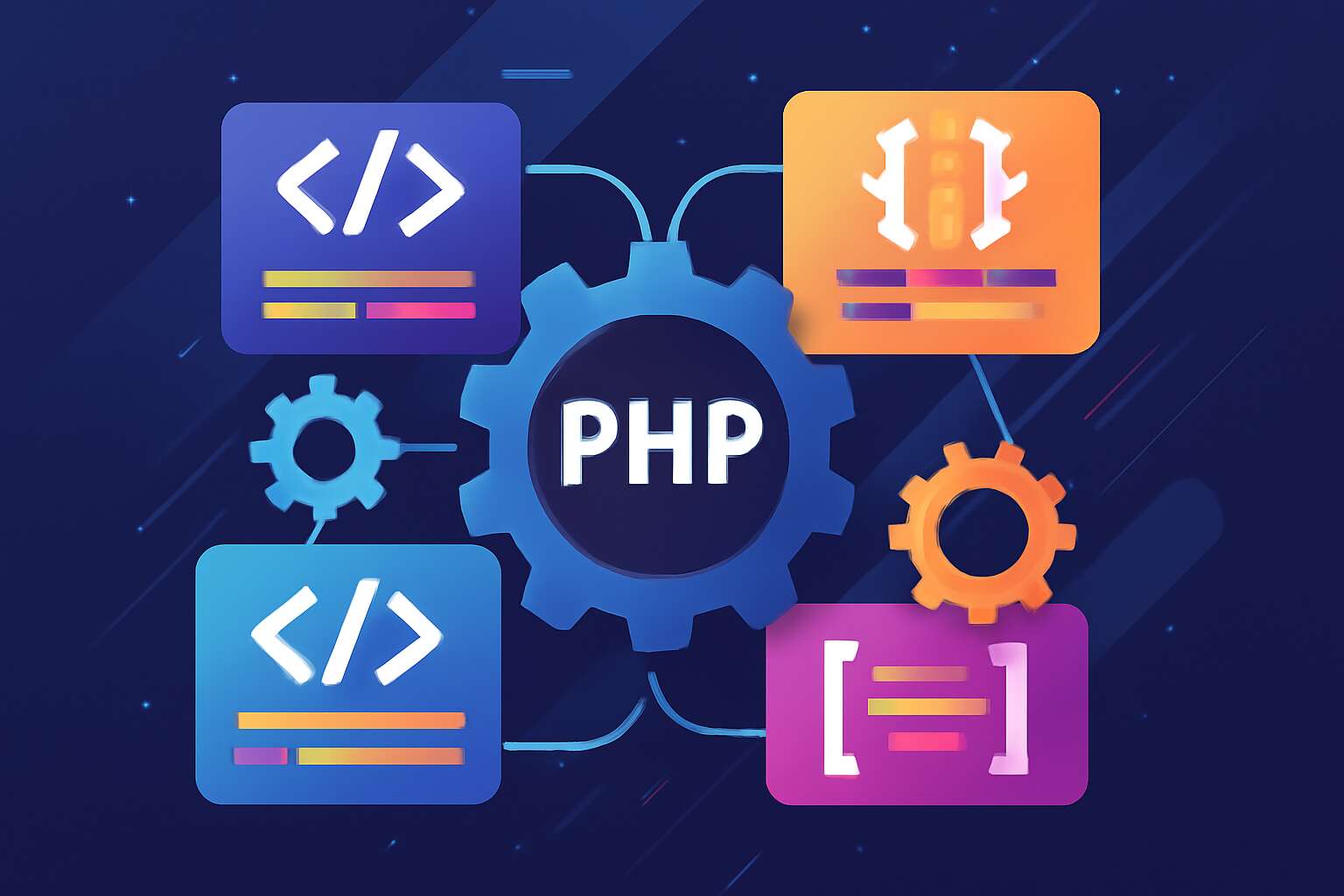
Top PHP Development Frameworks in 2024
Laravel - Features, Benefits, and Use Cases
In 2024, choosing the right PHP development framework can feel like navigating a labyrinth of endless possibilities. Among the myriad options, Laravel stands out as a beacon for developers seeking power, elegance, and flexibility. Its rich feature set transforms complex projects into manageable masterpieces, making it a top choice for enterprise-level applications and startup ventures alike.
What truly sets Laravel apart is its ability to streamline development through an intuitive syntax and a comprehensive ecosystem of tools. From robust routing to advanced ORM (Object-Relational Mapping), it accelerates project timelines without sacrificing quality. Laravel’s modular architecture also makes it adaptable to evolving project demands, ensuring longevity and scalability.
For those considering a PHP development framework that combines modern design with practical benefits, Laravel’s benefits are compelling. Its community-driven approach means continuous updates and a wealth of resources. Whether building a new platform or enhancing existing infrastructure, Laravel’s versatility makes it an indispensable tool in any PHP developer’s arsenal.
Symfony - Strengths and When to Use
In the realm of PHP development frameworks, Symfony emerges as a majestic giant, renowned for its robustness and architectural elegance. With over 60,000 projects powered by Symfony, it’s clear that this framework offers a compelling blend of stability and flexibility—traits that resonate deeply with developers crafting intricate, scalable applications. Symfony’s strength lies in its modular architecture, empowering teams to build customised components that seamlessly integrate into larger systems.
Unlike other frameworks, Symfony’s maturity ensures a rich ecosystem of reusable bundles and an emphasis on best practices, making it an ideal choice when longevity and maintainability are paramount. When to harness this powerful php development framework? It’s particularly well-suited for enterprise-grade solutions, complex APIs, and projects requiring long-term sustainability.
- Highly customizable with a vast library of reusable components
- Excellent support for testing and debugging, ensuring quality at every stage
- Strong community backing and extensive documentation
In essence, Symfony’s strengths shine brightest when faced with demanding, large-scale projects that demand both innovation and resilience. For organisations seeking a php development framework that combines tradition with modernity, Symfony offers a portal into a universe of limitless possibilities.
CodeIgniter - Lightweight Framework for Rapid Development
In the rapidly evolving landscape of PHP development frameworks, CodeIgniter continues to stand out as a lightweight yet powerful choice for developers seeking rapid deployment. Its minimalistic design allows for swift setup, making it ideal for projects where time is of the essence. Unlike more heavyweight frameworks, CodeIgniter’s core is stripped down to essentials, yet it remains incredibly flexible and extendable.
What truly sets CodeIgniter apart is its simplicity. It doesn’t drown developers in complex configurations; instead, it provides a straightforward environment to build robust applications quickly. This makes it perfect for small to medium-sized projects that demand both speed and stability. Moreover, its extensive documentation and active community ensure support is always at hand.
- Fast performance due to its lightweight architecture
- Easy to learn, even for beginners in PHP development framework
- Rich library of pre-built functions accelerates development cycles
For organisations aiming to streamline their workflow without sacrificing quality, CodeIgniter remains a formidable contender in the realm of PHP development frameworks. Its blend of simplicity and power proves that sometimes, less truly is more—especially when time and efficiency are paramount.
Yii2 - Performance and Scalability for Large Applications
In 2024, Yii2 continues to solidify its reputation as a top PHP development framework, especially when dealing with large-scale applications. Its focus on performance and scalability makes it an ideal choice for enterprises demanding robust solutions. Yii2’s architecture is designed to handle high traffic volumes efficiently, ensuring applications stay swift and responsive under heavy loads.
What sets Yii2 apart is its modular structure. This allows developers to build complex systems without sacrificing clarity or speed. The framework’s built-in features, such as Gii, enable rapid code generation, accelerating development cycles significantly. Many organisations appreciate Yii2’s ability to seamlessly scale while maintaining top-tier performance.
- High performance for demanding enterprise applications
- Easy to extend with custom modules and components
- Robust security features to protect large datasets
For teams prioritising a php development framework that offers both flexibility and power, Yii2 remains a dependable choice. Its blend of performance optimisation and scalability ensures that growing projects can evolve without bottlenecks. When the goal is to build resilient, large applications, Yii2 stands out as a leading contender in the PHP development framework landscape.
Choosing the Right PHP Framework for Your Project
Project Size & Complexity - Small, Medium, and Large Scale Applications
In the shadowed corridors of software architecture, choosing the right php development framework becomes a pivotal act—an almost arcane ritual that determines the fate of your digital creation. Size and complexity are the guiding stars in this decision; a delicate balance between nimbleness and robustness. For small projects, a lightweight php development framework offers swift deployment and minimal overhead, perfect for those fleeting shadows of prototypes and MVPs. Medium-sized applications demand a framework that balances flexibility and structure, capable of evolving without succumbing to chaos.
Large-scale applications, however, require a fortress of scalability and performance. Here, the choice often hinges on frameworks that can handle vast, interconnected systems with grace. Consider the following elements that influence this sacred decision:
- Performance optimisation
- Modular architecture
- Extensibility and future-proofing
Ultimately, selecting the right php development framework is a matter of understanding the dark art of your project’s scope—an act that can either illuminate your path through the shadows or plunge you into chaos.
Performance & Speed - Optimizing for Efficiency
When it comes to choosing a php development framework, performance and speed are paramount. In a digital landscape where milliseconds matter, optimising for efficiency can make the difference between a seamless user experience and frustrating lag. A well-selected framework not only accelerates development but also ensures your application runs smoothly under load.
The key lies in understanding how a php development framework handles resource management and processing tasks. Frameworks built with performance optimisation in mind often feature caching mechanisms, efficient routing, and minimal overhead. For projects demanding lightning-fast responses, choosing a framework that supports modular architecture and extensibility guarantees future-proofing and scalability.
In essence, selecting the right php development framework is an intricate dance—balancing speed, robustness, and the capacity to scale. When these elements align, your project can transcend expectations and stand resilient amidst the shadows of competition.
Development Speed - Rapid Prototyping and MVPs
Choosing the right PHP development framework can feel like trying to find a needle in a haystack—except the haystack is made of code, and the needle determines whether your project is a roaring success or a sluggish failure. When speed and efficiency are non-negotiable, selecting a framework that accelerates rapid prototyping and MVP (Minimum Viable Product) development becomes crucial.
A good PHP development framework streamlines the entire process, allowing developers to turn ideas into working prototypes at lightning speed. Instead of reinventing the wheel with every project, utilise a framework that offers built-in tools for quick setup, flexible architecture, and scalability. For instance, some frameworks prioritise simplicity and minimalism—perfect for small-scale apps—while others support complex, large-scale projects demanding high performance and robustness.
- Speed of development
- Ease of prototyping
- Future scalability
In essence, the choice of a PHP development framework can make or break your project’s development speed—so pick wisely, and watch your ideas leap from concept to reality faster than you can say “deployment”!
Community & Support - Importance of Ecosystem and Documentation
Choosing the right PHP development framework is akin to selecting a trusted companion for your coding journey. A vibrant community and comprehensive support ecosystem can turn a daunting task into a manageable adventure. When a framework boasts active forums, readily available tutorials, and a wealth of plugins, it becomes a beacon for both novice and seasoned developers alike.
An extensive ecosystem ensures that you won’t be left stranded when encountering bugs or seeking innovative tools. Documentation, in particular, is the unsung hero—clear, detailed, and regularly updated guides transform complex concepts into digestible lessons.
For instance, some PHP development frameworks thrive precisely because of their vibrant communities, offering a treasure trove of shared knowledge and collaborative problem-solving. This collective wisdom accelerates development and mitigates frustration—making your project not just feasible, but enjoyable.
In the grand tapestry of choosing a PHP development framework, prioritising community and support isn’t just wise; it’s indispensable. After all, even the most elegant code can falter without a supportive ecosystem to back it up.
Advantages of Using a PHP Development Framework
Code Reusability - Streamlining Development Processes
In the labyrinth of software creation, efficiency is the guiding star. A PHP development framework acts as an architect’s blueprint, transforming chaos into harmony. One of its most compelling advantages is **code reusability**—a concept akin to moulding clay into myriad forms, each piece echoing the last but serving a distinct purpose. This not only accelerates the development process but also fosters consistency across projects, reducing bugs and enhancing maintainability.
By leveraging the power of reusable components and modular design, developers can save invaluable time and resources. Imagine crafting a complex application where core functionalities—such as authentication, data validation, or session management—are seamlessly integrated across different modules. This streamlining of development processes ensures that every line of code contributes to a more agile, adaptable project.
In essence, a PHP development framework transforms the developer’s craft into a symphony of efficiency, where each reusable fragment harmonises with others, forging a resilient and scalable digital masterpiece.
Security Features - Built-in Security Protocols
In the digital battleground where cyber threats lurk around every corner, security isn’t just a feature—it’s the backbone of any reputable PHP development framework. Thankfully, many frameworks come armed with robust, built-in security protocols that act like a digital fortress, shielding applications from malicious attacks. These security features often include automatic input validation, protection against SQL injection, Cross-Site Scripting (XSS), and Cross-Site Request Forgery (CSRF).
What sets a top-tier php development framework apart is its proactive stance on security. Instead of retrofitting patches after a breach, these frameworks embed security seamlessly into their core architecture. For instance, some offer ready-to-use authentication modules, encrypted sessions, and secure password hashing—think of it as having an army of digital guards keeping watch around the clock.
In a world where data breaches are all too common, leveraging a php development framework with advanced security features isn’t just wise; it’s essential. After all, safeguarding your application’s integrity ensures peace of mind for both developers and users, transforming complex security challenges into a manageable, even elegant, aspect of your development process.
MVC Architecture - Separation of Concerns
In the labyrinth of modern web development, the architecture of choice often determines the destiny of an application. A PHP development framework employing the Model-View-Controller (MVC) paradigm offers a beacon of clarity amidst the chaos. By enforcing a strict separation of concerns, it transforms complex code into a harmonious symphony, where each component plays its part without drowning in the cacophony of tangled logic.
This architectural elegance not only streamlines development but also cultivates maintainability and scalability. Developers can focus on individual facets—be it data handling or user interface—without disturbing the delicate balance of the whole. It’s akin to choreographing a ballet, where precise movements lead to a flawless performance.
Moreover, MVC architecture fosters code reusability, enabling components to be repurposed across multiple projects—saving time and reducing errors. For a PHP development framework, this means quicker deployment and a more resilient, adaptable foundation. Truly, embracing MVC is embracing a future of organised, efficient, and resilient web applications.
Third-party Integrations - Extending Functionality
In the intricate dance of modern web development, the capacity to extend functionality seamlessly often distinguishes the transient from the enduring. A robust PHP development framework serves as a fertile ground for third-party integrations, transforming dormant code into a vibrant ecosystem of features. Such frameworks act as a nexus—inviting plugins, libraries, and external APIs—each addition amplifying the core architecture’s potential.
The advantage lies in agility. Developers can incorporate sophisticated payment gateways, analytics tools, or social media modules without reinventing the wheel. This modular approach not only accelerates deployment but also bolsters the application’s resilience through continuous enhancement.
Consider the following avenues for third-party integrations:
- Enhanced security protocols via external authentication services.
- Advanced caching mechanisms to optimise performance.
- Rich media handling capabilities, including video and image processing.
By harnessing these external tools, a PHP development framework becomes a living, breathing entity—adapting swiftly to evolving needs, elevating user experience, and safeguarding the application’s future. It’s an orchestration where every integrated element contributes to a symphony of efficiency and innovation.
Best Practices for PHP Framework Development
Following Coding Standards - Ensuring Maintainability
In the bustling realm of PHP development frameworks, the true magic lies in maintaining clean, consistent code—like a well-organised sock drawer. Adhering to coding standards isn’t just about looking good; it’s the secret sauce for future-proof, maintainable applications. When developers follow a recognised set of best practices, they ensure their code remains comprehensible, even years down the line, or when the new hire is a caffeine-fuelled intern.
To keep things tidy, consider employing PHP coding standards such as PSR-12, which promotes standardised indentation, naming conventions, and file organisation. This not only streamlines teamwork but also reduces bugs and debugging time. Remember, a well-structured PHP development framework can significantly cut down on technical debt—saving both time and money in the long run. After all, a clean codebase is the backbone of scalable, secure, and high-performance PHP applications.
Efficient Database Management - Using ORM and Migrations
Efficient database management is the backbone of a robust PHP development framework. When building complex applications, relying solely on raw SQL can become cumbersome and error-prone. Instead, leveraging Object-Relational Mapping (ORM) tools simplifies interactions with the database by allowing developers to work with objects rather than tables. This abstraction layer not only enhances code readability but also significantly speeds up development time.
Migrations further complement ORM by providing a structured way to version control database schema changes. They enable teams to track modifications, roll back updates if necessary, and maintain consistency across environments. For example, using a migration tool, you can effortlessly create, modify, or delete database structures without risking data corruption.
In the world of PHP development framework, combining ORM with migrations ensures data integrity, accelerates deployment, and reduces bugs—making it an essential best practice for scalable, secure applications.
Version Control Integration - Collaborative Development
In the intricate dance of collaborative PHP development, integrating robust version control is the rhythm that keeps the symphony harmonious. Within a PHP development framework, seamless version control fosters transparency, accountability, and smooth coordination among team members. It transforms chaotic spaghetti code into a curated tapestry of progress, where each change is meticulously tracked and reversible. This level of organisation is vital for maintaining the integrity of complex applications, especially when multiple developers work concurrently on different features or bug fixes.
To elevate your PHP development framework to new heights, consider adopting best practices such as establishing clear branching strategies, regular code reviews, and comprehensive commit messages. These practices act as the compass guiding teams through the labyrinth of code modifications and feature integrations. Whether you’re working on a small project or a sprawling enterprise application, the importance of disciplined version control cannot be overstated. After all, in the realm of PHP frameworks, collaboration is the heartbeat that drives innovation and excellence.
Testing & Debugging - Unit and Integration Testing
In the intricate realm of PHP development, ensuring your code performs flawlessly is nothing short of alchemy. Testing and debugging within a PHP development framework act as the enchanted mirror, revealing hidden flaws before they manifest into chaos. Unit testing, like a vigilant guardian, scrutinises individual components, safeguarding the foundation of your application. Meanwhile, integration testing weaves these components into a cohesive tapestry, verifying seamless interaction and data flow.
Embracing best practices means adopting a disciplined approach—crafting meaningful test cases, maintaining a comprehensive test suite, and leveraging automation to catch issues swiftly. For instance, employing tools such as PHPUnit can elevate your testing regimen, transforming it into a powerful shield against bugs. By weaving these testing rituals into your development process, you cultivate an environment where quality and stability flourish, ensuring your PHP development framework remains a sanctuary of reliability amidst the chaos of code.
Future Trends in PHP Framework Development
PHP Framework Compatibility with Modern Technologies - API-First and Microservices
As the digital landscape evolves at an unprecedented pace, PHP development frameworks are poised to embrace the future of technology with bold strides. The integration of PHP frameworks with modern tech stacks—particularly API-first architectures and microservices—embodies a revolutionary shift. This transformation isn’t merely a trend but a reflection of how scalable, flexible, and resilient web applications must be to thrive in an interconnected world.
Compatibility with these emerging paradigms means PHP frameworks are increasingly designed to facilitate seamless API integration and support microservice deployment. Such alignment empowers developers to build modular systems that are easier to maintain, update, and scale—an essential trait in today’s fast-moving digital economy. Frameworks that adapt to these trends will likely offer enhanced support for containerisation, serverless architectures, and real-time data handling, shaping a new era of PHP development framework capabilities.
In this landscape, the quest is for tools that blend traditional robustness with cutting-edge agility. The future of PHP development framework lies in its ability to bridge legacy systems with innovative technology, ensuring that legacy codebases don’t become antiquated relics but rather catalysts for future-proofed solutions. As these frameworks evolve, they will continue to serve as the backbone of modern web development—fostering an ecosystem where adaptability and resilience are paramount.
Performance Optimization - Ahead with PHP 8+
As PHP continues to evolve, performance optimisation remains at the forefront of development priorities. With PHP 8+ now standard, developers are witnessing a significant boost in speed and efficiency, making PHP development frameworks more powerful than ever. PHP 8 introduced features like JIT compilation, which can dramatically reduce response times and improve processing speed, especially in CPU-intensive applications.
Future trends point towards harnessing these advancements to create more scalable and resilient web solutions. Frameworks are increasingly integrating native support for PHP 8+ features, enabling developers to leverage the latest language capabilities without sacrificing stability. This seamless compatibility fuels faster development cycles and enhances overall application performance.
- Enhanced asynchronous processing
- Optimised memory management
- Improved error handling mechanisms
All these elements contribute to the heightened performance of PHP development frameworks, ensuring they remain relevant in a competitive landscape. As the technology progresses, expect to see even more innovative approaches to performance optimisation—making PHP not just a reliable choice but a frontrunner in high-performance web development.
Adoption of AI and Machine Learning - Integrating Advanced Features
As the digital landscape accelerates into a new era, the integration of AI and machine learning within PHP development frameworks promises to revolutionise how web solutions are crafted. Imagine a future where PHP frameworks not only handle traditional tasks but also adapt intelligently—learning from user behaviour and automating complex processes seamlessly. This evolution will enable developers to build smarter, more intuitive applications that anticipate user needs with remarkable accuracy.
The adoption of advanced AI features in PHP development frameworks can significantly enhance functionalities such as personalised content delivery, real-time data analysis, and automated decision-making. For instance, incorporating natural language processing allows for chatbots that genuinely understand customer queries, providing a more human touch. Furthermore, machine learning algorithms embedded within these frameworks can optimise server responses and resource allocation dynamically, elevating overall performance.
- Enhanced predictive analytics
- Intelligent content management
- Automated security threat detection
These innovations are set to redefine the boundaries of what PHP development frameworks can achieve, fostering a new wave of scalable, resilient, and efficient web applications. As AI and machine learning become integral to the development process, the future of PHP frameworks looks brighter than ever—more adaptable, more powerful, and more attuned to the evolving needs of users worldwide.
Open-source Contributions - Community-Driven Enhancements
In the ever-evolving world of PHP development frameworks, open-source contributions serve as the heartbeat of innovation. The vibrant community of developers worldwide continuously refines and expands these frameworks, transforming them into powerful tools that adapt to modern demands. This collaborative spirit fuels rapid enhancements, ensuring PHP frameworks remain at the forefront of technology trends.
Community-driven enhancements unlock a treasure trove of features that benefit both newcomers and seasoned programmers. From innovative security protocols to seamless third-party integrations, the collective effort creates a dynamic ecosystem. Notably, many PHP development frameworks thrive because of these open contributions, fostering a culture of shared knowledge and continuous evolution.
In fact, the most successful PHP frameworks often boast extensive repositories of plugins, libraries, and extensions—each born from community ingenuity. These elements not only streamline development but also open new horizons for customisation and scalability. As open-source projects flourish, they ensure that PHP development frameworks remain resilient, adaptable, and aligned with the latest technological advancements.
Such collaborative momentum is vital for future-proofing PHP frameworks, enabling developers to craft sophisticated, scalable web solutions that meet the demands of an increasingly digital world. The collective effort ensures that PHP remains a powerful, flexible choice—driven by community passion and shared expertise.