Design Principles for a Professional Website
Clean and Modern Layout
A clean and modern layout isn’t just an aesthetic choice; it’s the backbone of a professional website. When visitors land on your page, their first impression hinges on clarity and visual harmony. An uncluttered design guides the eye effortlessly, allowing your content to shine without unnecessary distractions.
Incorporating ample white space isn’t merely a stylistic flourish—it enhances readability and lends an air of sophistication. Think of it as giving your visitors room to breathe, making navigation intuitive and engaging. For professional website tips, simplicity paired with strategic accents often makes the biggest impact.
A well-balanced layout employs a hierarchy that directs attention where it’s needed most. Consider the following elements:
- Consistent colour schemes that reflect your brand identity
- Minimalist typography that’s both elegant and legible
- Clear call-to-action buttons that stand out without overwhelming
Remember, a modern design isn’t about flash; it’s about function wrapped in finesse. This subtle yet powerful approach elevates any professional website, ensuring visitors stay longer and engage more deeply.
Consistent Branding and Color Scheme
In the realm of professional website tips, one principle reigns supreme: consistent branding. A cohesive colour scheme isn’t just about aesthetic charm; it’s the silent ambassador of your brand identity, whispering reliability and sophistication to every visitor. When colours harmonise across your site—be it the headers, buttons, or background — they forge an unspoken trust that can turn casual browsers into loyal clients.
But let’s not forget the subtle art of colour psychology. A judicious palette can evoke feelings of calm, excitement, or authority, depending on your industry. For instance, a financial consultancy might lean into navy and grey, signalling stability, while a creative agency could embrace vibrant hues to showcase innovation. These choices exemplify how professional website tips extend beyond mere visual appeal; they’re strategic tools to influence perception.
- Ensure your colour choices align seamlessly with your brand’s core message.
- Maintain consistency across all digital touchpoints for recognisability.
- Use contrasting colours wisely to guide attention without overwhelming.
In essence, a colour scheme that resonates with your brand identity doesn’t just elevate your website’s aesthetic; it’s a cornerstone of effective communication—an often overlooked gem in the treasure trove of professional website tips. After all, a well-crafted colour palette is the silent language that speaks volumes about your professionalism and attention to detail.
Intuitive Navigation Structure
Imagine visiting a website that feels like navigating a labyrinth—confusing menus, hidden links, and a maze of pages. Frustrating, right? A staggering 94% of users cite easy navigation as the top reason they stay on a site. That’s the power of an intuitive navigation structure! When your visitors can find what they need without a treasure map, they’re more likely to stick around and convert.
Crafting this seamless experience involves more than just throwing in a menu. It’s about logical organisation, prioritising essential pages, and avoiding clutter. Think of your site as a well-organised library—books (or pages) in their right sections, easily accessible. To achieve this, consider implementing a clear hierarchy, with primary categories leading to subcategories that make sense. A well-structured menu, coupled with consistent placement across all pages, ensures visitors won’t get lost in the digital wilderness.
For those who love a bit of structure, here’s a quick rundown on designing a user-friendly navigation system:
- Prioritise your key pages—make it easy for visitors to find what they need.
- Use familiar labels—think ‘About Us’ instead of ‘Corporate Identity’.
- Limit menu options—less is more to prevent cognitive overload.
- Include a search feature—sometimes, visitors just want to type their way home.
Remember, when it comes to professional website tips, an intuitive navigation structure isn’t just a convenience; it’s a cornerstone of user experience that keeps your audience engaged and eager to explore more.
Responsive Design for All Devices
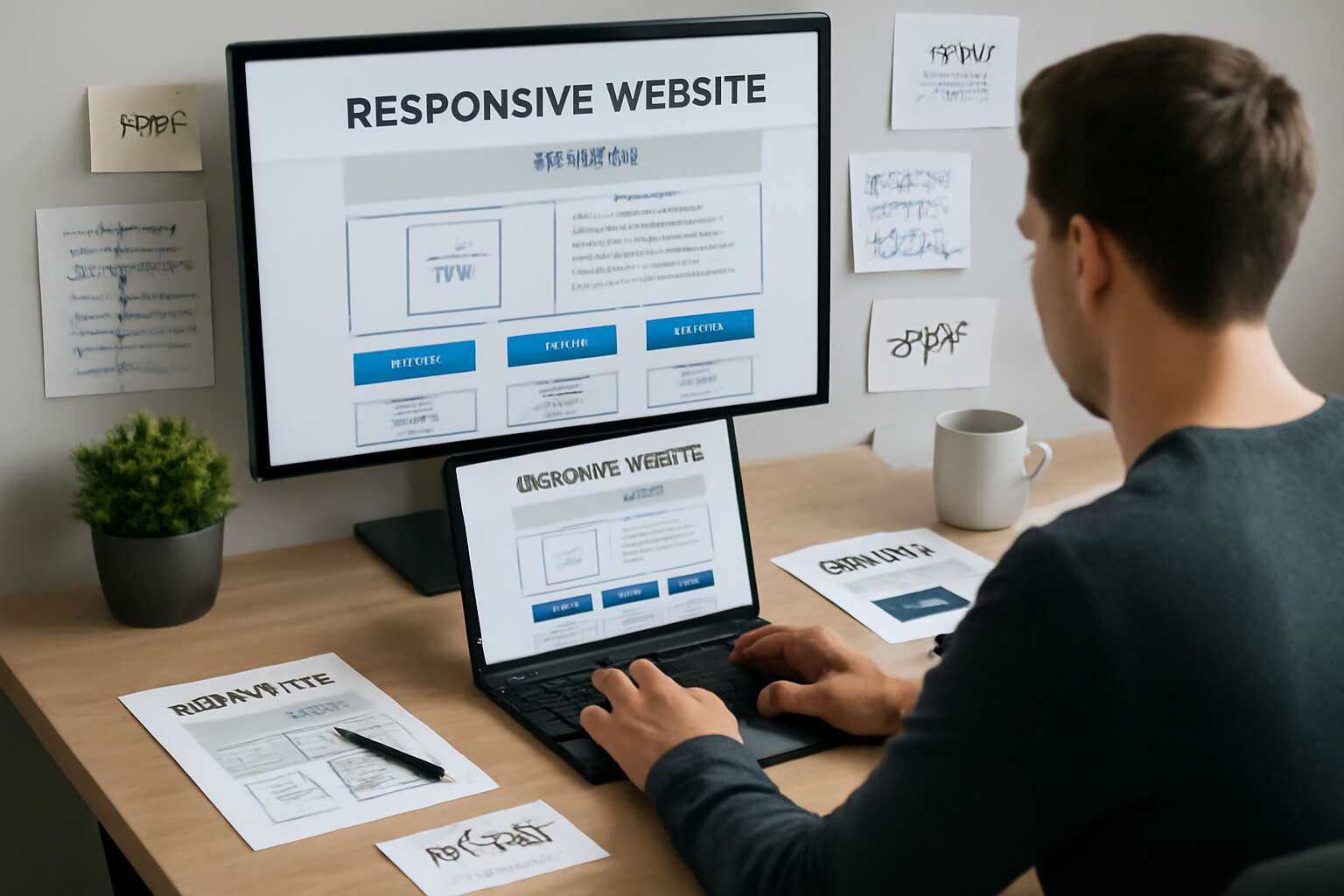
In the shadowed corridors of the digital realm, a website’s responsiveness can mean the difference between ethereal allure and forgotten relic. A staggering 94% of users abandon sites that fail to adapt seamlessly to their device of choice. Responsive design for all devices, therefore, is not merely a feature but the heartbeat of a truly professional website. It ensures that whether a visitor prowls on a sleek desktop or an elusive mobile device, the experience remains fluid, undisturbed by clunky layouts or broken elements.

To craft such an immersive environment, consider the subtle art of flexible grids and adaptive images. These elements breathe life into your site, moulding effortlessly to any screen size. Incorporate media queries that anticipate the user’s device, adjusting typography and navigation to preserve clarity and ease of use. Remember, a professional website tips the balance between aesthetic elegance and functional resilience—making every visitor feel as if they’ve stepped into a domain designed solely for them.
- Prioritise fluid grid systems that adapt to diverse viewport dimensions.
- Utilise scalable images that maintain quality without hindering load speeds.
- Ensure touch-friendly buttons and links for mobile users, avoiding frustration and missed connections.
- Test across multiple devices and browsers—what appears perfect on one may distort on another.
Content Strategy and Optimization
Clear and Concise Messaging
In the vast digital landscape, where attention spans are fleeting and competition is fierce, crafting a clear and concise messaging strategy becomes paramount for a professional website. It’s not merely about presenting information but tailoring it to resonate deeply with visitors, guiding their journey seamlessly. A well-defined content strategy aligns your core message with your audience’s needs, fostering trust and engagement.
To truly stand out, focus on delivering content that is both compelling and optimised for search engines. Use keywords thoughtfully within your content, ensuring they flow naturally and enhance readability. Incorporating relevant keywords—such as ‘professional website tips’—within your headings and body text helps boost your visibility without sacrificing the integrity of your message.
Implementing a structured approach can make all the difference. Consider the following:
- Developing a content calendar that balances informative articles, engaging visuals, and strategic keywords.
- Regularly analysing user behaviour to refine messaging and optimise for SEO.
- Ensuring every piece of content aligns with your brand voice and overarching goals, reinforcing clear and concise communication throughout your site.
Use of Targeted Keywords
In the vast symphony of the digital realm, a well-crafted content strategy acts as the conductor’s baton, guiding visitors through a harmonious journey. The secret lies in the artful integration of targeted keywords that breathe life into your message without interrupting its flow. When words resonate naturally, search engines recognise the genuine value of your content, elevating your site’s visibility and authority.
Optimising content isn’t merely about sprinkling keywords like confetti; it’s about embedding them with purpose. For example, weaving keywords such as “professional website tips” into your headers and paragraphs ensures your message reaches the right audience. To elevate your optimisation efforts, consider a structured approach: develop a content calendar, analyse user behaviour regularly, and ensure each piece aligns with your overarching brand voice. This meticulous process transforms your website into a compelling, search-engine-friendly haven that truly stands out.
Creating Engaging and Valuable Content
In a digital landscape teeming with competition, crafting a compelling website isn’t just about aesthetics — it’s about strategic content that captivates and converts. Creating engaging and valuable content is the secret weapon behind any successful online presence. When your content offers genuine insight, it encourages visitors to linger, explore, and trust your expertise. But what truly makes content resonate? The answer lies in a finely tuned content strategy that balances relevance with depth.
To maintain this delicate equilibrium, consider implementing a systematic approach. For example, developing a content calendar ensures your messaging remains consistent and aligned with your brand. Regular analysis of user behaviour reveals what topics truly engage your audience, allowing you to refine your content accordingly. Remember, quality content isn’t static; it evolves based on feedback and analytics. By weaving targeted keywords seamlessly into your articles and headers, your website becomes a beacon for search engines, elevating your visibility while delivering real value to your visitors. Such meticulous attention transforms your site into a trusted resource—an essential element of professional website tips.
Strategic Call-to-Action Placement
In the grand theatre of the internet, a strategic content approach can turn your website from a mere digital billboard into a persuasive powerhouse. Effective content strategy isn’t just about throwing words on a page; it’s about crafting a narrative that guides visitors seamlessly towards your desired action. Think of it as a well-choreographed dance—each piece of content should serve a purpose and lead the audience closer to conversion. Incorporate targeted keywords naturally, ensuring they fit like a glove rather than a sore thumb, to boost your SEO ranking without sacrificing readability.
Strategic call-to-action placement is the unsung hero of professional website tips. When positioned thoughtfully—whether at the end of a compelling article or subtly within your content—it nudges visitors to take that crucial next step. Remember, a call-to-action that’s too aggressive can scare visitors away, while one that’s too subtle risks being ignored. A balanced approach might look like this:
- Placing a clear, enticing button after a persuasive paragraph
- Using contrasting colours to draw attention without clashing with your colour scheme
- Ensuring the call-to-action aligns with the content’s intent, creating a natural flow
By mastering the art of content strategy and optimisation through strategic call-to-action placement, your website evolves from a static online brochure to a dynamic hub of engagement. These professional website tips will help you craft an experience that not only attracts visitors but transforms them into loyal customers—because in the end, content that converts is the true crown jewel of SEO mastery.
Technical SEO Best Practices
Optimized Website Speed
In a digital landscape where seconds can make or break a visitor’s experience, optimizing website speed emerges as a cornerstone of professional website tips. When a site loads sluggishly, it not only frustrates users but also signals to search engines that your platform may lack credibility. The human tendency to seek instant gratification fuels the relentless demand for swift, seamless interactions online.
Enhancing website speed involves more than just compressing images or minifying code; it’s about understanding the psychological impact of delay. A delay of even a few seconds can diminish trust and increase bounce rates. To achieve this, consider implementing techniques such as leveraging browser caching, using Content Delivery Networks (CDNs), and reducing server response times.
Here are some essential steps for optimising website speed, integral to any set of professional website tips:

- Optimise images for faster loading without sacrificing quality.
- Limit the use of heavy scripts and third-party plugins that can bog down performance.
- Regularly monitor your site’s speed using tools like GTmetrix or PageSpeed Insights, then act swiftly on their recommendations.
Speed is more than a technical metric; it’s a reflection of your commitment to your visitors’ experience and a testament to your professionalism. Every millisecond saved is a step closer to forging trust and establishing authority in your niche.
Proper Use of Metadata and Headings
In the vast realm of digital diplomacy, the language of your website’s code speaks volumes—sometimes more than the words themselves. Proper use of metadata and headings is the subtle art of signalling to search engines and visitors alike that your site is both authoritative and accessible. A well-structured hierarchy of headings not only enhances readability but also bolsters your SEO efforts by highlighting key themes with clarity and precision.
Think of metadata as your site’s eye-catching billboard—succinct yet compelling. Titles and meta descriptions should incorporate targeted keywords seamlessly, acting as a beacon for those scanning search results. When paired with strategic heading tags, these elements create a cohesive narrative that guides users effortlessly through your content.
Incorporating professional website tips such as these ensures your platform remains both user-friendly and search engine friendly. Remember, a site that communicates effectively through metadata and headings demonstrates your commitment to excellence and helps establish your authority in your niche. After all, every element counts in the pursuit of digital distinction!
XML Sitemaps and Robots.txt File
In the shadowy corridors of the digital realm, where unseen forces govern the flow of information, technical SEO best practices are your guiding lanterns. XML sitemaps serve as a clandestine map, revealing the hidden pathways of your website’s structure to search engines. They ensure every crevice and chamber is discovered, indexed, and understood—crucial for maintaining your site’s spectral presence in search results.
Equally vital is the robots.txt file, a silent sentinel that whispers instructions to web crawlers, shielding sensitive chambers from prying eyes. A well-crafted robots.txt file prevents unnecessary crawling of duplicate pages or shadowy archives, preserving your site’s integrity and focus.
Consider the following essentials:
- Ensuring your XML sitemap is up-to-date and submitted to search engines.
- Restricting access to non-essential pages via the robots.txt file.
- Verifying that all vital pages are accessible and unblocked.
Together, these elements form the backbone of professional website tips, fostering a site that operates with both clandestine precision and open accessibility—an unseen force that commands respect in the vast digital abyss.
Clean URL Structures
In the realm of digital strategy, a clean URL structure can be the difference between being easily found or lost in the clutter. Search engines favour URLs that are simple, descriptive, and free of unnecessary parameters. These professional website tips not only improve your site’s SEO but also enhance user experience, making navigation intuitive and straightforward. A well-crafted URL offers clarity—both for visitors and search engines—about what the page contains, fostering trust and credibility.

Consider these essential elements of a tidy URL:
- Use hyphens to separate words for better readability
- Avoid long strings of numbers or irrelevant characters
- Keep URLs concise yet descriptive
Implementing these practices ensures your URLs are both human-friendly and optimised for search engines, reinforcing your site’s professional credibility in the vast digital landscape. Remember, in the world of professional website tips, simplicity often yields the most powerful results.
User Experience (UX) Enhancements
Fast Loading Times
In the relentless dance of digital attention, a website’s speed often dictates whether visitors linger or vanish into the ether. Fast loading times are not merely a feature; they are the heartbeat of a seamless user experience (UX). When a site loads swiftly, it whispers trust and professionalism, inviting users to explore without frustration or delay.
To elevate this vital aspect, focus on reducing server response times, compressing images, and leveraging browser caching. Here’s a quick guide to optimise your site’s speed:
- Minimise HTTP requests
- Enable compression (like Gzip)
- Use Content Delivery Networks (CDNs)
Implementing these professional website tips transforms a sluggish site into a sleek, responsive portal—one that honours visitors’ time and keeps them engaged. After all, in the realm of digital craftsmanship, speed is the silent ambassador of excellence.
Accessible Navigation
In the labyrinth of digital engagement, accessible navigation remains a cornerstone of a truly professional website. When visitors find their way effortlessly through your site, it fosters a sense of trust and sophistication that mere aesthetics cannot achieve. Clear pathways guide users to the content they seek, reducing frustration and encouraging deeper exploration. As visitors navigate, they appreciate intuitive menus, logical hierarchies, and easily identifiable links—elements that transform a good website into a seamless experience.
To elevate this aspect, consider implementing a well-structured menu system that adapts gracefully across devices. Incorporate descriptive labels and minimise the number of clicks needed to reach key pages. Sometimes, a simple
- logical categorisation
- consistent placement of navigation elements
- accessible dropdowns
can make all the difference. These professional website tips ensure your site remains welcoming and easy to use, turning casual visitors into loyal patrons. After all, an intuitive navigation structure is not just a feature; it is the silent ambassador of user satisfaction and brand integrity.
Clear Visual Hierarchy
In the vast digital landscape, a clear visual hierarchy is the compass that guides visitors seamlessly through your website. Studies show that users form opinions about your site within seconds—making it crucial to prioritise information effectively. A well-structured layout employs size, colour, and spacing to direct attention and distinguish primary from secondary content, creating an intuitive flow.
Imagine your webpage as a carefully curated gallery: the most important messages should stand out without overwhelming the viewer. Incorporating strategic use of headings, subheadings, and visual cues ensures your audience absorbs key messages effortlessly. When combined with professional website tips such as consistent font choices and balanced whitespace, this approach transforms a simple site into an engaging experience. After all, a clear visual hierarchy isn’t just about aesthetics—it’s about fostering clarity and trust in a crowded digital world.
Minimalist Design Elements
In a digital world where attention spans are shorter than a cat’s nap, embracing minimalist design elements can be a game-changer for your website’s user experience (UX). Less is often more—fewer cluttered graphics, streamlined content, and a pared-down colour palette can make your site feel inviting rather than overwhelming.
By stripping away unnecessary ornamentation, you allow essential messages to shine and guide visitors effortlessly. Incorporating strategic whitespace, simple icons, and restrained typography not only enhances readability but also exudes professionalism. Remember, a minimalist approach doesn’t mean sacrificing personality; it’s about crafting a sleek, intuitive interface that encourages exploration. For those seeking professional website tips, embracing minimalism can be a subtle yet powerful way to elevate user satisfaction and foster trust in your brand.
Security and Trust Signals
SSL Certificates
In the vast digital realm, where trust is the currency of connection, security signals serve as the vigilant guardians of your professional website. A cornerstone of these signals is the SSL certificate, an invisible yet formidable shield that encrypts data and reassures visitors that their interactions are safeguarded. When a website displays the padlock icon in the browser bar, it whispers a promise of legitimacy and integrity, transforming sceptics into loyal patrons.
Beyond the visual reassurance, implementing robust security measures fosters a culture of trust. Search engines increasingly prioritise secure websites, making SSL certificates not just a safety feature but a strategic move in your SEO arsenal. Incorporating trust signals such as security badges or customer testimonials further fortifies your credibility, elevating your site from mere presence to an authoritative digital sanctuary.
For those seeking to elevate their online presence, understanding and applying professional website tips related to security can be transformative. It’s not just about protection; it’s about crafting an environment where visitors feel confident and valued. A secure, trustworthy website isn’t just a digital address—it’s a beacon of reliability in a sea of competitors.
Privacy Policies and Terms
In the bustling digital marketplace, trust is as rare and precious as a unicorn riding a rainbow. An often-overlooked aspect of professional website tips is the importance of transparent privacy policies and comprehensive terms of service. These pages act as the secret handshake between your site and its visitors, signalling that you respect their privacy and operate with integrity. Failing to provide clear privacy policies can turn sceptics into sceptics with a single scroll—no one wants to feel like they’ve wandered into a digital black hole.
Adding visible trust signals, such as security badges alongside well-crafted privacy policies, reassures visitors that their data is in safe hands. A detailed terms of service not only clarifies user rights but also shields your business from potential legal pitfalls.
- Transparency boosts credibility
- Clear policies improve user confidence
- Trust signals reinforce security
Ultimately, embracing these professional website tips creates an environment where visitors feel valued and protected, turning casual browsers into loyal advocates. Because in the realm of online business, trust isn’t just earned—it’s meticulously built with every policy and trust signal displayed.
Trust Badges and Customer Testimonials
In the digital landscape, where trust is the currency of success, demonstrating security and reliability becomes essential. Incorporating visible trust signals—such as security badges—can significantly elevate visitor confidence. These badges, often representing SSL certificates or recognised security standards, serve as immediate reassurance that their data is protected from malicious threats. When paired with a professional website that communicates transparency, these trust signals form a powerful shield against scepticism.
Customer testimonials further bolster credibility, providing authentic proof that your business delivers on its promises. Genuine reviews allow potential clients to glimpse real experiences, transforming abstract promises into tangible proof of value. To maximise their impact, consider highlighting testimonials that address common concerns or showcase unique service benefits. Such elements act as social proof, subtly persuading visitors that your site isn’t just reputable—it’s also worth their trust.
- Display security badges prominently alongside your privacy policies.
- Curate authentic customer testimonials that resonate with your target audience.
- Ensure your website’s visual cues reinforce a sense of safety and professionalism.
By weaving these professional website tips into your digital strategy, you create an environment where visitors feel both valued and secure. Trust signals like security badges and compelling customer testimonials are not mere accessories; they are fundamental pillars that underpin the integrity of your online presence. When every element works harmoniously, your site transforms into a fortress of credibility—an inviting space where potential clients are eager to engage and stay awhile.
Regular Security Updates
In the realm of digital enchantment, trust is the golden thread that weaves visitors into loyal patrons. Yet, even the most captivating websites can falter without the armour of robust security. Regular security updates serve as vigilant guardians, warding off the ever-evolving threats lurking in the shadows. These updates fortify your site’s defences, ensuring that vulnerabilities are patched swiftly before any malicious intent can strike. A website cloaked in the latest security measures radiates reliability, reassuring visitors that their data is under steadfast protection.
Incorporating proactive security protocols isn’t merely a technical necessity; it’s a cornerstone of professional website tips that forge credibility. An ordered approach, such as:
- Implementing automatic updates for security plugins
- Monitoring server logs for suspicious activity
- Regularly backing up website data
can create a fortress of trust. When combined with visible security badges and transparent privacy policies, these measures craft an environment where visitors feel safe to explore—transforming your site into a sanctuary of confidence and professionalism.
Conversion Optimization Techniques
Effective Landing Pages
In the labyrinth of digital presence, a single visitor’s fleeting glance can determine the fate of your enterprise. Conversion optimisation techniques transform passive visitors into engaged stakeholders, but the true art lies in crafting effective landing pages. These pages serve as the threshold — a carefully curated space that guides, persuades, and ultimately converts.
The secret is in the details; every element of a landing page must be purpose-driven. A compelling headline, paired with a visual hierarchy that directs attention, can make all the difference. Incorporate trust badges and customer testimonials subtly, for they whisper assurances that resonate deep within human psychology.
Consider the flow of information like a human conversation — natural, persuasive, unhurried. You might find that a numbered list of key features or benefits can help distil complex messages into digestible insights, fostering trust and clarity. Remember, the goal of professional website tips is to create an environment where visitors feel understood and valued, paving the way for meaningful conversions.
A/B Testing Strategies
Conversion optimisation techniques are the secret weapon in transforming casual visitors into loyal customers. A/B testing strategies, in particular, wield the power to unveil what truly resonates with your audience. By systematically comparing two versions of a webpage—altering headlines, call-to-actions, or visual elements—you can uncover insights that lead to higher engagement and conversions.
The key is to approach testing with precision. Focus on variables that matter—such as button colours or placement—and measure results meticulously. Consider implementing an ordered list of tests to track progress clearly:
- Refine headlines to boost click-through rates
- Experiment with CTA button colours for optimal visibility
- Adjust imagery to enhance emotional appeal
This iterative process ensures your website evolves into a conversion magnet, guided by data rather than guesswork. When executed with the right mindset, these professional website tips can turn your digital presence into an unstoppable force.
User-Friendly Forms
In the digital realm, a user-friendly form isn’t just a convenience—it’s the bridge between visitor interest and conversion. Research shows that overly complex or invasive forms can reduce submission rates by up to 30%. This underscores the importance of crafting forms that are both inviting and efficient. After all, your website’s purpose hinges on its ability to capture leads without alienating potential customers.
Streamlining your forms involves more than just reducing fields; it’s about thoughtful design. Consider employing a logical sequence, eliminating redundant questions, and making sure each element serves a clear purpose. Incorporating visual cues, such as checkmarks or progress bars, guides users seamlessly through the process. When executed with finesse, a well-optimised user form can transform casual visitors into loyal clients, bolstering your reputation for offering professional website tips that truly deliver.
Exit-Intent Popups
When visitors are about to leave your site, an exit-intent popup can be a subtle yet powerful tool to capture their attention. These popups appear just as the user’s cursor drifts towards the browser’s close button, offering a last chance to engage. Implementing well-designed exit-intent popups can reduce bounce rates and increase conversions, making them a vital component of professional website tips.
A strategic message—whether it’s a special offer, a downloadable resource, or a gentle reminder—can turn an abandoning visitor into a loyal lead. To optimise effectiveness, ensure these popups are unobtrusive, visually appealing, and tailored to the visitor’s behaviour. Consider testing different triggers and content types to discover what resonates most. When executed thoughtfully, exit-intent popups become a subtle yet impactful method to boost engagement, proving that even the final moments before departure can be a golden opportunity for conversion.
Analytics and Continuous Improvement
Using Google Analytics
Effective analytics can transform a good website into a great one. Google Analytics remains a cornerstone for understanding visitor behaviour, providing invaluable insights into what works and what doesn’t. By monitoring key metrics such as bounce rate, session duration, and traffic sources, you can fine-tune your website for better engagement.
Using this data, you can identify which pages resonate most with your audience and where visitors tend to drop off. This is where continuous improvement comes into play. Regularly analysing your analytics allows you to adapt your strategy, optimise user experience, and boost SEO performance.
A practical approach involves setting up custom reports and goals, so you track the impact of your efforts in real time. Implementing these professional website tips ensures your site remains responsive to user needs and search engine algorithms, ultimately driving growth and success.
Monitoring User Behavior
Monitoring user behaviour with the precision of a master cartographer can unlock hidden treasures within your website’s landscape. By delving into Google Analytics, you gain a window into the intricate pathways visitors traverse, revealing where they linger and where they falter. This ongoing process of analytics and continuous improvement transforms your site from a static vessel into a living, breathing entity tuned to the desires of your audience.
Imagine your website as a sprawling city—each page a bustling district. Regularly analysing traffic sources, bounce rates, and session durations allows you to identify the hotspots that attract visitors and the alleyways that lead to abandonment. To streamline this voyage, consider setting up custom reports and goals, turning raw data into actionable insights that shape your professional website tips. In this way, your digital domain remains dynamic, responsive, and ever-evolving—an enchanted realm that captivates and converts.
Regular Content Updates
In the realm of digital craftsmanship, the art of analytics is where mastery truly shines. A website that evolves through continuous improvement becomes a living testament to your dedication. By regularly updating your content, you breathe new life into your site, ensuring it remains relevant and compelling. Fresh, insightful material not only captivates visitors but also signals to search engines that your platform is active and authoritative—an essential facet of professional website tips.
Leveraging analytics tools like Google Analytics reveals the subtle currents guiding your visitors’ journeys. Observing trends and patterns allows you to refine your approach, subtly steering users towards the desired actions. To keep this process nimble, consider establishing a schedule for content updates, embedding new keywords, or experimenting with innovative formats. After all, a static website risks becoming a forgotten relic—and in today’s fast-paced digital landscape, adaptability is paramount.
Implementing a structured approach, such as a content calendar or regular review cycle, ensures your website remains a vibrant, engaging hub. This ongoing cycle of analysis and renewal embodies the essence of professional website tips—transforming your site into a dynamic realm that continuously enchants and converts visitors into loyal patrons.
Implementing Feedback Loops
In the pursuit of excellence, the secret lies in listening to your audience and adapting accordingly. Analytics serve as a compass, guiding you through the often turbulent waters of user behaviour. Embracing feedback loops—where insights from data inform ongoing improvements—transforms a static site into a dynamic platform that resonates deeply with visitors. This continuous cycle of refinement ensures your website remains relevant and compelling.
To harness this power effectively, establish a routine review process. Regularly scrutinising analytics data reveals patterns—such as which pages retain visitors longest or where drop-offs occur. Incorporating this information helps you make informed decisions, whether that’s tweaking your content, adjusting calls-to-action, or experimenting with layout changes.
- Analyse visitor flow to identify bottlenecks
- Test different headlines or visuals based on user engagement data
- Refine keywords to boost search engine visibility
By implementing a structured feedback loop, your website evolves into an engaging, user-centric hub. This approach embodies the core of professional website tips, where data-driven insights foster growth and loyalty, turning casual visitors into loyal patrons eager to return.