Understanding PHP Versioning and Support
What is a PHP version and why it matters
“Versioning is velocity,” a seasoned mentor once whispered, and that heartbeat still echoes through South Africa’s buzzing digital lanes. PHP versioning isn’t mere trivia; it shapes speed, security, and compatibility across apps that touch every corner of business and culture.
Every PHP version carries a life cycle: active development, maintenance, and sunset. Staying on a supported line means timely security patches and modern features; skirting it invites vulnerabilities and sluggish performance. When asked which php version is best, balance stability with future readiness, not hype.
Consider these guardrails:
- Active support and security updates
- Frameworks, libraries, and hosting compatibility
- Clear upgrade paths and minimal downtime
Active support lifecycle and end-of-life dates
Versioning is velocity, they say, and in South Africa’s digital night that velocity cuts deep. The PHP realm hums with a quiet tension, each release a doorway into faster, safer code. For travelers of the server room, the question remains: which php version is best.
Active support keeps bugs at bay and features breathing easy; security patches arrive as long as the version remains in the supported line. End-of-life arrives when updates stop. To navigate this, consider:
- Active support duration and security updates
- Official lifecycle dates and upgrade paths
- Downtime, compatibility, and hosting considerations during upgrades
Consult the PHP project lifecycle pages and your host for exact dates; the balance between stability and future readiness rests there.
LTS and long-term support concepts
Version churn in PHP moves faster than Cape Town traffic on payday. It’s not just techno-sorcery—it’s how developers keep apps secure and snappy. Understanding PHP versioning and long-term support lets teams plan upgrades like seasoned sailors plotting a reef-safe course. So, which php version is best for your stack?
In practical terms, understanding PHP versioning and long-term support translates to staying ahead without breaking the pipeline. Think durations, cadence, and upgrade paths as your guardrails.

- Lifecycle windows and support timelines
- Maintenance cadence and risk management
- Hosting and extension compatibility cross-checks
- Migration routes with minimal disruption
Here in the South African hosting ecosystem, official lifecycle dates are your compass, and staying aligned with security updates keeps teams from night-shift panic and budget blowouts.
Impact of PHP version on security and performance
Change here is the only constant, and in PHP that truth wears a cape. In the South African hosting landscape, a well-chosen PHP baseline keeps sites nimble and secure against latency and lurking threats. Understanding how versioning nudges security patches and performance tweaks helps teams plan upgrades with the calm of mariners plotting a reef-safe course. So, which php version is best for your stack?
Ideally, the life of a PHP project rides on a version that receives security fixes, maintenance updates, and compatible extensions. Newer branches bring faster request handling, better memory management, and modern features that reduce I/O waits.
- Security patches delivered on schedule, lowering exposure
- Core performance gains from optimizations and optional JIT
- Broad hosting and extension compatibility with predictable upgrades
Choosing the Best PHP Version for Your Project
Assessing project requirements and dependencies
Speed matters in SA’s bustling online scene. A local developer once said, “Choosing the php version is choosing the pace your site will keep.” That bite of truth anchors this discussion on picking a PHP stack that fits real-world needs.
Choosing the best PHP version for your project begins with a frank assessment of requirements and dependencies. To answer which php version is best, weigh runtime needs, framework compatibility, and hosting constraints alongside security expectations and maintenance windows.
Consider these factors:
- Hosting stack compatibility
- Frameworks and CMS support
- Security lifecycle and performance expectations
Compatibility with CMS and frameworks
In South Africa’s bustling online scene, every millisecond matters and the pace a site can sustain is its compass. A local developer once said, “Choosing the PHP version is choosing the pace your site will keep.” That bite of truth anchors the quest to determine which php version is best for your stack.
- WordPress and its vast ecosystem
- Drupal for complex, content-heavy sites
- Joomla for flexible publishing
- Laravel and Symfony for modern applications
With those ecosystems in view, the stage is set for a version that balances core speed, contemporary features, and long-term support.
In the end, the tale of choosing the best PHP version is a story of pace meeting practicality—where CMS ambitions guide the traveler through the PHP landscape.
Performance benchmarks by PHP version
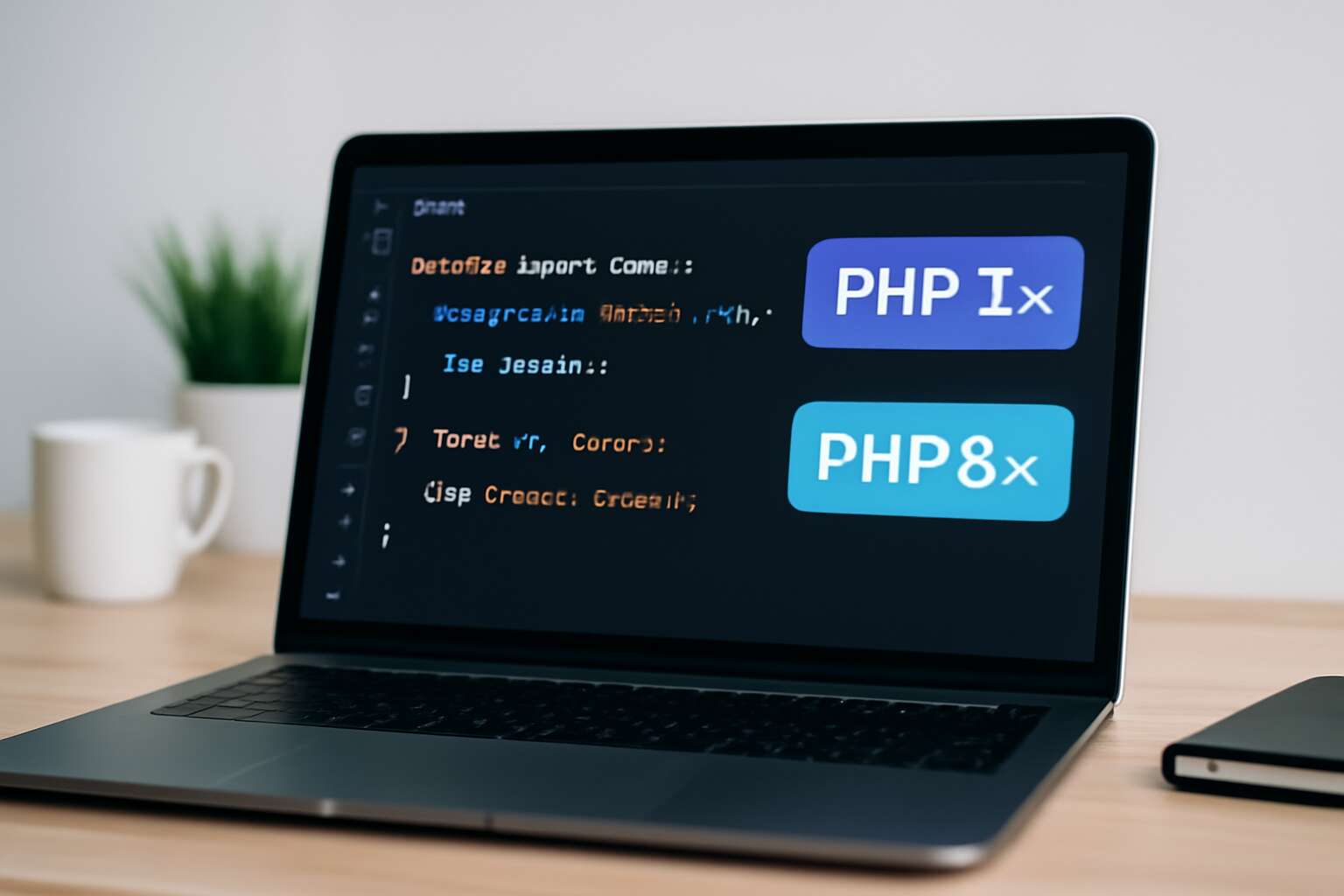
South Africa’s online market hums at a fevered pace, and every millisecond matters. But which php version is best across workloads often doubles as a performance litmus test. When exposed to practical benchmarks across PHP 7.x and 8.x, the newer releases usually deliver quicker request handling and leaner memory footprints, especially under concurrent load. It’s not just about raw speed; compatibility and future-proof features ride along for the ride.
- Throughput (requests per second)
- Memory usage per request
- Latency under peak concurrency
Across WordPress, Drupal and Laravel alike, the benchmarks tell a spectrum: newer PHP versions often accelerate delivery and simplify modern development, yet hosting realities and dependencies still steer the final call.
Security considerations and patch availability
South Africa’s online marketplaces pulse with fierce tempo—every millisecond counts, and one patch can tilt the entire checkout story. For many merchants, even a 100ms delay costs conversions, and the choice around which php version is best becomes a decision about security, stability, and future-proofing. So, which php version is best for your project?
Security considerations and patch availability shape this choice. Versions with active security support and prompt vulnerability fixes keep data safer and compliance smoother.
- Security patch cadence and vulnerability response timelines
- Backwards compatibility of dependencies and CMS plugins
- Vendor support and ecosystem readiness for library updates
Ultimately, the best version is a reflection of your project’s appetite for renewal and resilience. It is a shimmering balance between risk and opportunity, where security, compliance, and momentum converge toward a trusted horizon.
Hosting environment constraints and PHP runtimes
In South Africa’s fast-moving digital markets, a single millisecond can tilt a checkout. The question of which php version is best becomes a study in tempo, trust, and future-proofing—where today’s hosting realities meet tomorrow’s opportunities. Latency, throughput, and runtime behavior shape every verdict.
Hosting environment constraints and PHP runtimes govern posture more than glossy benchmarks. The landscape comprises shared and dedicated tiers, cloud orchestration, memory ceilings, and process pools; it also weighs the choice between FPM and CGI. Dependencies, containers, and deployment cadences all converge here.
- Hosting architecture with resource guarantees
- PHP runtime model and memory limits
- Container readiness and deployment cadence
Ultimately, the best version mirrors resilience and renewal, where security meets momentum on a bright horizon. The answer to which php version is best lies at the intersection of hosting constraints and evolving runtimes, a harmony that feels both inevitable and luminous.
Migration Pathways: Upgrading PHP Safely
Planning upgrades with minimal downtime
In South Africa’s digital landscape, upgrading PHP with care is a quiet spell that keeps the lights on. A staged upgrade plan can cut downtime by up to 60%, letting users glide through new features while the codebase evolves. The aim is a smooth transition that preserves reliability for local customers and remote sites alike.
If you’re asking which php version is best for your stack, start with these steps:
- Dependencies and deprecations that impact your codebase
- The role of a staging environment that mirrors production
- Downtime planning and clear communication with stakeholders
- Rollback and recovery strategies to protect the live site
From there, careful monitoring and incremental testing keep the upgrade predictable. Even in SA’s cloud and on-prem hosting, a well-planned upgrade preserves performance while staying within service levels.
Testing in staging environments
Migration pathways hinge on patience and staged reality checks. A staging environment that mirrors production is your crystal ball—what passes here tends to pass there, with fewer surprises.
- Subsampled traffic that mimics real user patterns
- Combo tests across critical features and dependencies
- Benchmarks to detect drift before it hits production
When you’re asked which php version is best, weigh the staging verdict against your stack’s peculiarities, dependencies, and performance goals. In South Africa’s mix of cloud and on-prem, a well-tested upgrade stays steady, letting your users glide through changes without drama.
Database and extension compatibility checks
Migration Pathways: Upgrading PHP Safely offers a quiet compass in the storm of change. One failed upgrade can cost hours of downtime, so the question which php version is best lingers, but safety trumps speed. A thoughtful upgrade respects database behavior and the quirks of extensions, mapping a path that your production realm can follow with confidence.
Careful compatibility checks anchor the move:
- Database drivers and extensions maintain parity with the new runtime.
- Composer dependencies and autoloaders align with the target PHP version.
- Monitoring boundaries and rollback options are sketched for calm recovery.
In South Africa’s hybrid cloud landscape, this pathway drifts less between staging and production, letting users glide through upgrades with steady faith.
Rollback and contingency strategies
In production, upgrades can feel like a quiet battle won or lost in the dark. The question of which php version is best surfaces, but the true measure is the rollback and contingency choreography that keeps traffic flowing. A disciplined plan transforms risk into momentum and time into certainty!
Rollbacks are not a panic button; they are rehearsed guardrails. I’ve learned that contingencies succeed when data integrity, code, and configuration move as one.
- Pre-upgrade snapshots of databases and binaries
- Traffic gating with feature flags and blue/green switchover
- Post-rollback validation and monitoring to confirm stability
In South Africa’s hybrid cloud landscape, this calm, rehearsed approach lets teams glide through upgrades with steady faith, reducing the cognitive load and avoiding unnecessary downtime.
Contingency strategies thread resilience into the upgrade tapestry.
Practical Guidelines for Different Scenarios
Small to medium websites and blogs
Across South Africa’s bustling web scene, speed is currency and outdated PHP is the laggard cousin at the braai. Anecdotally, sites on a supported php version enjoy tighter response times and fewer gremlins in production. So, which php version is best isn’t a whimsy but a practical decision rooted in your stack, hosting, and readers’ patience.
- Assess hosting constraints and the runtimes your stack truly supports
- Balance CMS and plugin compatibility against security and performance gains
- Plan upgrades during low-traffic windows and communicate changes clearly
In short, choose a version that keeps things secure, compatible, and delightfully speedy—without turning your maintenance cycle into a soap opera.
E-commerce platforms
For e-commerce platforms, which php version is best isn’t just a nerdy question—it’s a speed, reliability, and conversion lever in South Africa’s competitive online market. Shaving even a fraction of a second can tilt a buyer toward or away from a checkout.
Match your PHP version to your platform and the payment gateways you rely on so the checkout remains smooth and predictable.
- Keep dependencies lean and compatible so the storefront doesn’t suffer from downstream conflicts.
- Balance feature needs with long-term security posture to avoid dragging your site into friction and risk.
- Preview performance under expected peak traffic in a controlled environment before going live.
Ultimately, your choice comes down to the needs of your stack, customers, and hosting realities—aiming for security, compatibility, and a delightfully fast experience rather than drama in maintenance.
Enterprise apps with custom PHP code
In enterprise apps with custom PHP code, the question which php version is best isn’t a marketing hook—it’s the quiet engine behind speed, reliability, and user trust on South Africa’s enterprise stage. Bespoke workflows, regulatory checks, and customer expectations demand a runtime that doesn’t stall when complexity grows.

- Audit custom extensions and autoloaders for PHP runtime compatibility.
- Map database drivers and ORM layers to supported PHP features.
- Design upgrade paths with feature flags to minimize downtime.
Ultimately, teams weigh which php version is best against hosting realities and patch cadence; a stable, security-forward choice keeps production smooth while reducing risky refactors.
WordPress, Joomla, and Drupal considerations
In South Africa’s digital frontier, the runtime hums unseen, yet the choice of which php version is best governs speed and trust. “Performance is a feature,” says a seasoned Johannesburg developer, and the sentiment rings through every enterprise site.
Practical guidelines for WordPress, Joomla, and Drupal help locate the best cadence for compatibility.
- WordPress: ensure core, themes, and plugins align with the target PHP version and test in staging.
- Joomla: audit extensions for PHP feature support within hosting constraints.
- Drupal: verify core and modules are compatible via Composer, preserving upgrade paths.
Ultimately, the path to which php version is best is less a marketing hook than a commitment to stable security, reliable uptime, and the long arc of user trust on the South African stage.
Containers and serverless deployments
In South Africa’s cloud neighborhoods, containers hum softly, while one question governs performance and trust: which php version is best. Johannesburg developers note that sites on modern PHP runtimes load noticeably faster, turning speed into a tangible business signal.
- Base image aligns with a supported PHP version and long-term security updates.
- Leverage multi-stage builds to minimize image size and attack surface.
- Pin PHP extensions and CMS compatibility to avoid drift across environments.
For serverless deployments, capacity planning reshapes the math: brief cold starts and tight memory budgets make different PHP runtimes behave differently. The landscape favors those with fast boot times and robust patch cadence, where ecosystem support underpins long-term stability.
Ultimately, the choice sits at the crossroads of deployment model, security, and uptime—an ambiguous margin where a single PHP version tilts user trust across South Africa’s digital stages.
CI/CD and automated testing for PHP upgrades
In a market where latency gnaws at conversion, CI/CD pulses like a heartbeat beneath the server room walls. South African teams report that deployments on modern PHP runtimes slide in seconds rather than minutes, a quiet omen of reliability. When stakeholders murmur which php version is best, the answer rests on a careful calculus of boot times, patch cadence, and stack harmony. Automated testing becomes a confidant, sniffing drift before production exposure.
Practical guidelines for different scenarios unfold as a compact framework of foresight and restraint:

- Speed and reliability alignment across CI pipelines
- Compatibility and drift guardrails for PHP extensions and CMS
- Observability, automated testing, and rollback readiness