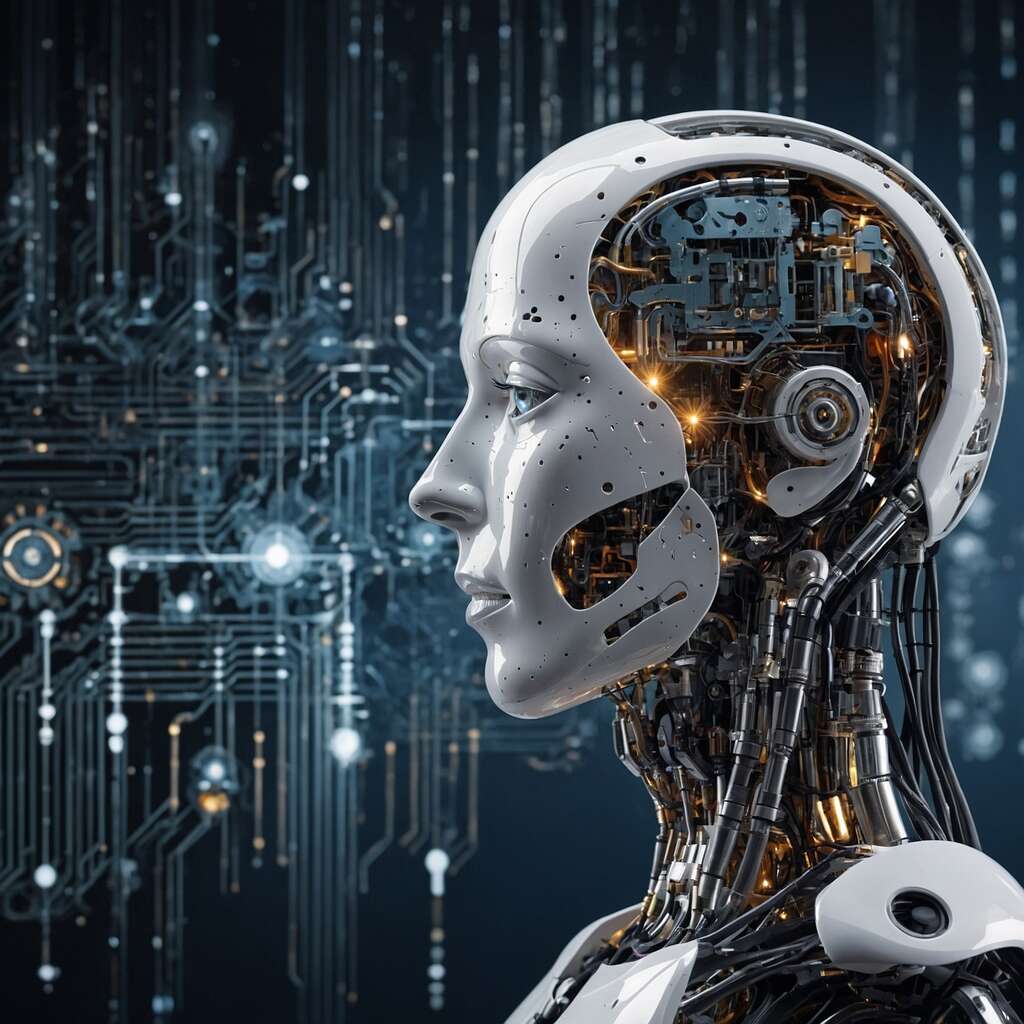
In the pantheon of modern inventions, where Wi-Fi reigns as the king and avocado toast sits snugly on its gilded throne, artificial intelligence tools strut onto the stage, clad in gleaming silicon and an insatiable appetite for data. It’s been estimated that by 2025, the global AI market will exceed a staggering $190 billion; a figure so colossal that it makes the GDP of some nations look meagre by comparison! “AI is the new electricity,” proclaimed Andrew Ng, a sentiment that reverberates through boardrooms and coffeehouses alike, where digital artisans and tech wizards peer into their screens, unearthing algorithms like alchemists of old.
A few years ago, if one had mentioned artificial intelligence tools at dinner parties, one might have been met with blank stares and polite nods—your average conversation about the weather being far more riveting. Today, mentioning AI is akin to throwing a live grenade into a gathering; all heads swivel as guests eagerly vie to share their latest forays into machine learning or debate the merits of conversational bots. Indeed, whether it’s an entrepreneur seeking to streamline customer service or a creative mind wishing to harness the Muse of Machines, one truth becomes glaringly apparent: the rise of artificial intelligence tools is redefining social discourse and, dare I say, societal norms.
Now, let us peruse the cast of characters that populates this curious AI landscape. First and foremost, there’s OpenAI’s ChatGPT—our friendly digital chat companion! Poised at the vanguard of human-like communication, it spews forth clever quips and insights, often leaving users all agog at its uncanny ability to mimic the nuances of conversation. The tool’s charm lies not merely in its prompts and completions but in the way it crafts responses that have us wondering if a machine is, in fact, plotting to usurp our conversational prowess.
Similarly, we have the data analysts’ darling, TensorFlow. This open-source framework, basking in the glow of its mathematical prowess, has garnered cult-like reverence among those who want to opine at length about neural networks and deep learning. Yet, like a good wine paired with a robust cheese, it flourishes in the hands of those who truly understand its complexities. One cannot simply douse their troubles in machine learning—like a vintage Bordeaux, it requires discernment and the occasional finesse.
In the realm of customer engagement, artificial intelligence tools have found a robust ally in chatbots, those ever-polite digital interfaces keen to answer your questions like an overzealous intern. When it comes to instant replies and 24/7 availability, few rivals these tireless avatars! Just think of them: tirelessly conversing, always in good humour, and immune to the drudgery that comes with repetitive tasks. However, one must tread carefully; the irony of AI chatbots attempting to decode human emotion can lead to situations that are equal parts hilarious and cringe-worthy. Picture, if you will, a chatbot offering unsolicited life advice about love and destiny while trying to discern whether you’re merely inquiring about the nearest coffee shop.
But let us not forget another critical segment of the AI toolkit: visual recognition software. After all, who among us hasn’t marvelled at the prowess of algorithms that sort through thousands of images, distinguishing a cat from a dog with more accuracy than your frazzled uncle at the family reunion? Tools like Google Vision stand as testament to the might of artificial intelligence, empowering everything from fashion analytics to the curious business of wine label recognition. This, dear reader, raises the question: are we trending toward a future where our wardrobes are curated by JPEGs rather than our own instincts? One can only hope that our social gatherings don’t descend into competitions over who has the most impeccably AI-sourced attire.
Of course, the titans of industry are not the only ones benefitting from this technological tsunami. Small businesses, with dreams as lofty as the office ceiling, are harnessing artificial intelligence tools to optimise their operations without the need for a battalion of analysts. One such tool is Hootsuite Insights, which turns the cacophony of social media chatter into actionable insights—a boon for brands seeking to curry favour with the masses. The irony here is palpable, as organisations simultaneously strive to foster genuine connections with customers while relying on AI to interpret human sentiment.
And therein lies a delicious paradox. Are we surrendering our social fabric to machines? With every prediction made by artificial intelligence tools and every personalised advertisement that appears just as we ponder a purchase, the distinction between human intuition and algorithmic programming blurs. The digital realm now boasts its own sophisticated vocabulary, where phrases like “predictive analytics” and “automated insights” bounce about like guests at a raucous soirée.
Let us not overlook the burgeoning phenomenon of AI in content creation. Tools such as Jasper AI offer writers the delicious opportunity to ‘collaborate’ with non-human entities in crafting everything from blog posts to advertising copy. Some sceptics lament that this may lead to a decline in the art of writing. Others argue it brings forth an exciting evolution—a harmonious blend of human creativity and machine efficiency! Who knew that the toddler-sized shadow of artificial intelligence would inspire writers to embrace new techniques, perhaps even sprucing up that cluttered desktop while they are at it?
The mingling of humanity and artificial intelligence raises ethical questions, too. As AI tools continue to lend their prowess to varied sectors, those who wield such technology must grapple with an unending barrage of ethical dilemmas. Decisions once rooted firmly in human judgement become tangled in a web of data-driven metrics and efficiency protocols. This situation could lead to disquieting scenarios—businesses using AI not merely to enhance service but to evade accountability, slicing through the moral fabric of society like a well-sharpened scalpel.
As the cavalcade of artificial intelligence tools marches ever-forward, they simultaneously emolliate and exacerbate age-old societal dynamics. With every passing moment, AI ushers forth a new era, one where creativity, efficiency, and ethics stand uncomfortably at the intersection of humanity and technology. Yet, in all this chic digital frenzy, one must remember to ground oneself in what truly makes social gatherings delightful: laughter, warmth, and a good old-fashioned sense of connection. After all, the machines may assist us, but it is the human touch that remains paramount in our crowded, chaotic, and utterly enthralling world!